JUNE 12- A Democracy That Leaves Women Behind
By Taiwo Adeleye
Again, June 122025 marks Democracy Day in Nigeria, a moment to commemorate the restoration of civilian rule and celebrate the principles of freedom, participation, and equality. Yet, for millions of Nigerian women and youth, this annual celebration serves not just as a reminder of democratic progress, but as a stark reflection of the persistent exclusion of women from leadership and critical decision-making spaces.
While democracy ideally offers every citizen equal opportunity to lead and contribute to nation-building, Nigeria’s 25 years of unbroken democratic experience tell a different story for women. Despite constituting nearly half of the country’s population, women remain grossly underrepresented across the executive, legislative, and judicial arms of government, as well as in corporate leadership, media, and other influential sectors.
Numbers Tell The Story
Despite making up almost half the population, women in Nigeria continue to be largely excluded from governance and leadership roles. In 2023, only 15 of the 469 members of the National Assembly were women, representing a mere 3.2%. At the state level, no woman has ever been elected governor, and only a handful serve as deputy governors or commissioners, a sharp contrast to regional counterparts like Rwanda and South Africa, Namibia where women’s representation stands at 61% and 46%, respectively
Political parties, gatekeepers of leadership, still treat women as tokens. They are placed in ceremonial roles such as “women leaders” without real decision-making power. When women contest for positions, they face not only financial and political obstacles, but also deep-rooted patriarchal resistance, character defamation, and outright sabotage.
Barriers Beyond the Ballot
Women face systemic barriers that stifle their political ambition and participation. Patriarchy, gender-based violence, lack of access to campaign funding, political thuggery, and media bias all contribute to creating an uneven playing field. Culturally, leadership is still seen as a male prerogative, and women who dare to challenge this narrative often pay a high price, facing character assassination, intimidation, and societal backlash.
Moreover, the economic sector reflects similar disparities. Women-led businesses receive a fraction of available financing. Female professionals in law, medicine, journalism, and engineering consistently hit glass ceilings, despite outperforming male counterparts in many metrics.
According to the survery report by Women Radio and Voice of Women Empowerment Foundation, 69% of grassroots women voted for men while 31% voted for women in the 2023 general election. It furthers solidify the assumption that society are conditioned to accept men more in leadership position than women. We don’t believe women are capable enough but how many capable women are occupying seats in governance that warrants them to be accepted.
But Women Have Still Led—Against the Odds
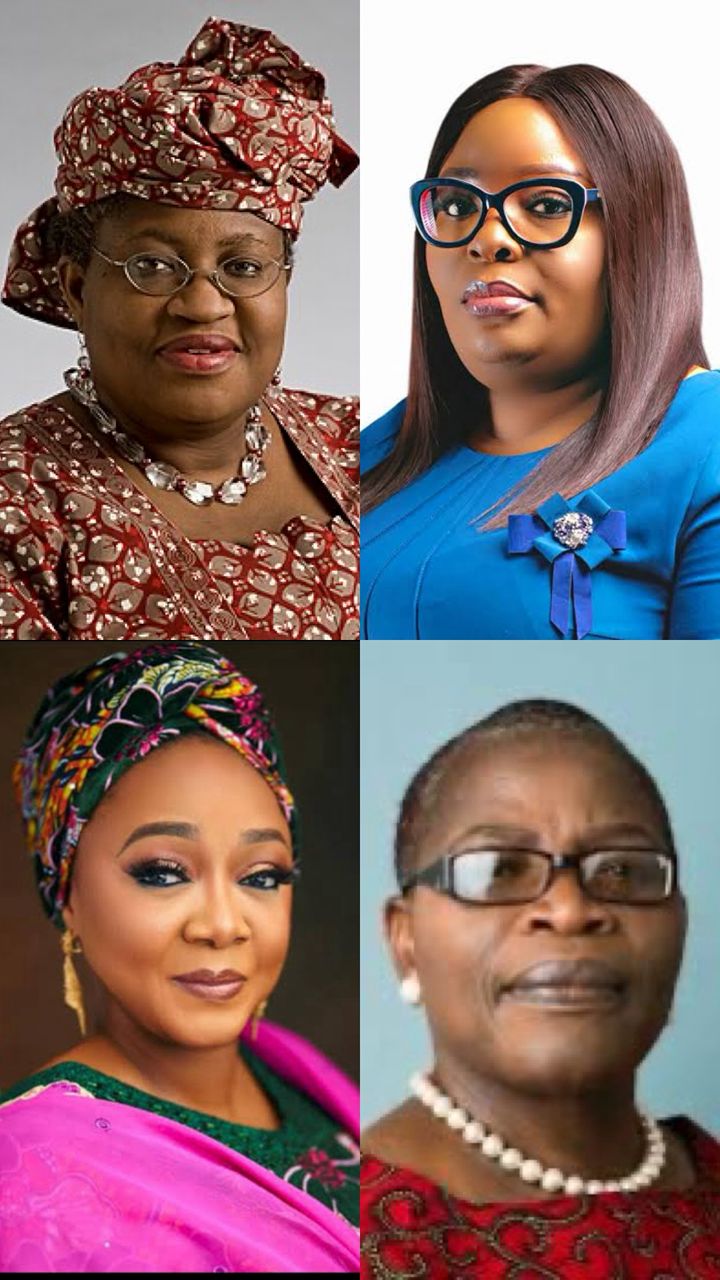
Still, Nigerian women have led courageously. From Dr. Ngozi Okonjo-Iweala breaking barriers on the global economic stage, to Oby Ezekwesili, Aisha Yesufu, Hadiza Bala Usman, and many others who have shown what inclusive leadership can look like.
These women, and countless others in local communities, media, business, and advocacy, have filled gaps where democratic institutions have failed. They have become symbols of resilience and leadership, not because democracy favored them, but because they fought against its failures.
What Must Change
If Nigeria’s democracy is to truly represent the people, it must intentionally dismantle the structuraland cultural barriers that exclude women. Political parties must adopt quotas not just on paper, but in practice. The electoral process must be made safer and more inclusive for female candidates. Laws protecting women against violence and discrimination must be enforced without bias.
Beyond politics, there must be a national commitment to gender equality in education, economic opportunity, healthcare access, and technology. Women must not only be seen as voters and supporters, but as leaders, innovators, and architects of national progress.
As we mark another Democracy Day, let it be more than a ceremonial reflection on history. Let it be a rallying call to action, a commitment to build a democracy that truly reflects the diversity and strength of its people. Until Nigerian women have an equal seat at the table, our democracy remains incomplete.
Democracy without women is a contradiction. The time for change is now.
All Categories
Recent Posts


University of Buckingham Confers Honorary Doctorate on Apostle Folorunso Alakija
WIMBIZ AT 25: ROOTED IN PURPOSE, RISING IN IMPACT, READY FOR THE WORLD
Categories
0905 555 8998
secretariat@wfm917.com