
Olusegun Odufuwa, LAGOS, NIGERIA | NOVEMBER 6, 2026
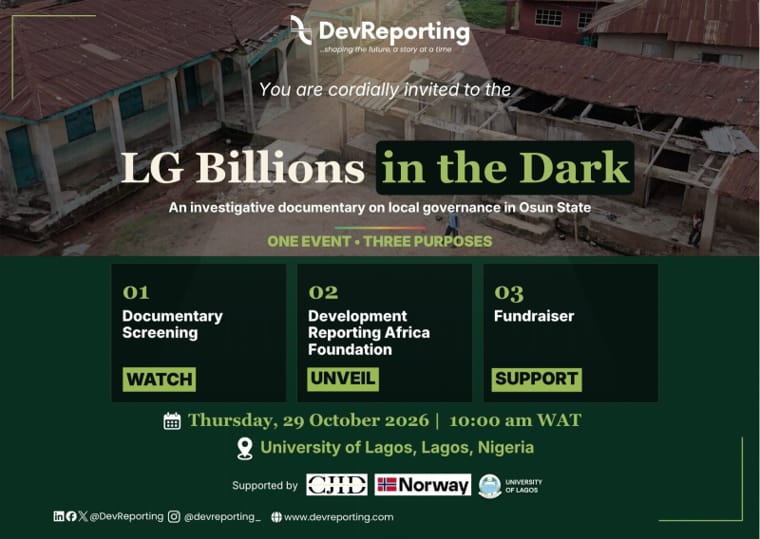
The state of public schools, primary healthcare facilities and basic infrastructure in several communities across Osun State came under scrutiny on Thursday, October 29, 2026, as development journalism organisation DevReporting premiered its investigative documentary, LG Billions in the Dark, at the University of Lagos.
The documentary, screened at the Faculty of Arts Theatre, examined the consequences of the prolonged crisis surrounding local government administration in Osun State, particularly the controversy over control of council funds and its implications for grassroots development.
Beyond the political arguments over local government autonomy, the investigation presented disturbing accounts of residents struggling with inadequate public services, deteriorating infrastructure and limited access to essential facilities.
Schools without teachers, children struggling to access education
One of the striking findings concerned the condition of public primary education in some communities.
At Oore Primary School in Boripe Local Government Area, the investigation reportedly found a situation in which just one teacher was responsible for teaching pupils while also performing the duties of the headteacher.
The documentary also brought attention to the experience of a young pupil, Omotayo Timilehin, who spoke about the difficulties of accessing education, with the nearest available school reportedly about 10 kilometres away.
In another disturbing discovery, some school buildings without roofs had reportedly become refuse dumps, raising questions about the state of educational infrastructure and the attention given to children’s learning environments.
Healthcare centres struggling to provide basic services
The investigation also examined primary healthcare delivery, reviewing 28 primary healthcare centres across the state.
At Abebi Afilaka Health Centre in Atakumosa West Local Government Area, the documentary highlighted reports that deliveries were conducted with the aid of torchlight, an indication of the challenges facing healthcare workers and patients.
At Olugunna Health Centre in Osogbo, residents reportedly described a poorly functioning facility without essential drugs.
The investigation also drew attention to the deteriorating condition of a hospital building in Ikoyi, where the structure was described as a shell of its former self.
These conditions raise serious concerns about the ability of rural and underserved communities to access basic medical services, particularly pregnant women, children and residents who cannot afford private healthcare.
Residents bear the cost of poor infrastructure
The consequences extend beyond schools and hospitals.
The documentary examined challenges relating to transportation, roads, security and other community infrastructure across locations including Iba, Ila Orangun, Irepodun, Ikoyi, Oore, Ede, Osogbo, Ikire and Ikirun.
For residents, poor roads make movement difficult, affect access to healthcare and create additional challenges for farmers and traders trying to transport their goods.
The experiences presented in the investigation raise a fundamental question about the relationship between public allocations and actual development at the grassroots.
Where are the local government billions?
The documentary also investigated the financial and political circumstances surrounding the 30 local government areas and Modakeke Area Council in Osun State.
During the investigation, local government chairmen raised concerns about their inability to access council funds.
One chairman, Hon. Ajibade Sikiru Oluwatoyin, reportedly said he could not access the funds meant for his council.
Another chairman, Adegoke Ogunsola, said he did not know how much was being paid into his council’s account monthly, explaining that he had neither access to the account nor transaction alerts.
DevReporting’s Team Lead, Mojeed Alabi, also disclosed that his team visited United Bank for Africa (UBA) to establish the status of some funds reportedly held in accounts opened by the disputed council chairmen. However, the bank declined to comment, citing ongoing court proceedings.
The investigation brings renewed attention to the Supreme Court’s July 2024 judgment on local government financial autonomy, which directed that allocations due to local governments be paid directly to their accounts rather than controlled through state governments.
Falana, Olorunyomi demand accountability
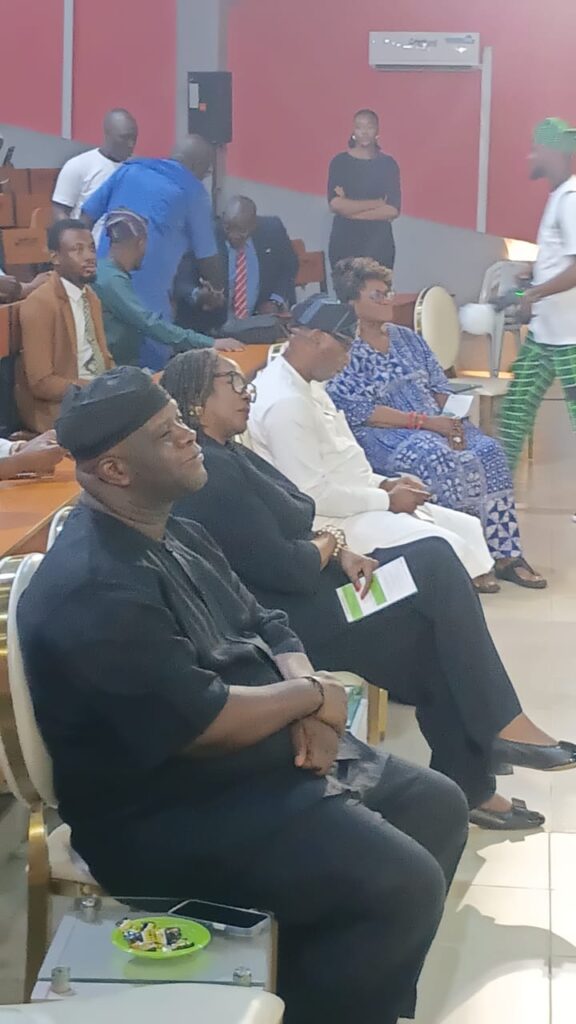
The documentary premiere attracted journalists, academics, civil society representatives, legal practitioners and public officials.
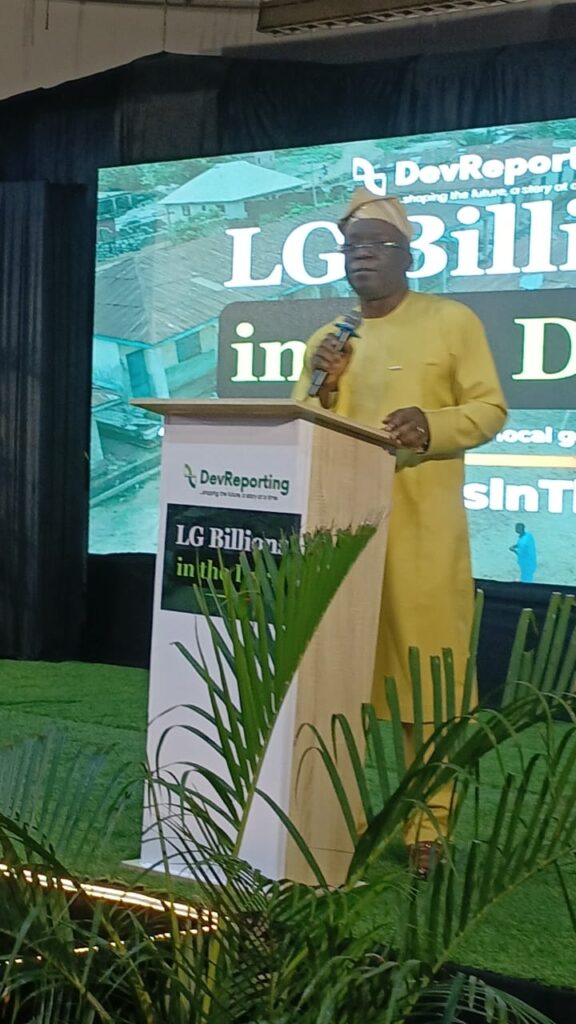
Delivering the keynote address, human rights lawyer and Senior Advocate of Nigeria, Femi Falana, called on Nigerians to demand accountability from local government authorities just as they do from state and federal governments.
Speaking on the theme, Accountability, Resources and Citizen Voices: Building Local Governments that Work for the People, Falana questioned the continued difficulties surrounding local government financial autonomy and urged citizens to demand information about public allocations and expenditure.
He also encouraged Nigerians to make use of the Freedom of Information Act to obtain details of government spending and monitor the implementation of public projects.
The Chairman of the occasion, Dapo Olorunyomi, publisher of PREMIUM TIMES and Chief Executive Officer of the Centre for Journalism Innovation and Development (CJID), emphasised the importance of journalism in strengthening democratic accountability.
A panel discussion featuring representatives from local government administration, legal practice, civil society and academia further examined how financial autonomy could translate into improved public services and meaningful grassroots development.
DevReporting unveils development journalism foundation
The event also featured the unveiling of the Development Reporting Africa Foundation (DRAF), the non-profit arm of DevReporting, established to strengthen development journalism, promote evidence-based reporting and advance accountability across African communities.
The organisation’s Team Lead, Mojeed Alabi, outlined the foundation’s vision and encouraged individuals and organisations to support its activities.
The documentary premiere and foundation launch were supported by the Centre for Journalism Innovation and Development (CJID), the Royal Norwegian Embassy and the University of Lagos.
The people deserve answers
The most compelling message from LG Billions in the Dark is that local government administration should be measured not merely by the amount of money allocated to councils or the political interests surrounding their leadership, but by the quality of life of the people they are established to serve.
When a child struggles to access a school, a health centre cannot provide essential medical services and communities continue to contend with neglected infrastructure, questions about public expenditure become more than political arguments.
They become questions about people’s welfare, opportunities and the future of their communities.
The investigation has therefore renewed the call for transparency in local government finances, implementation of financial autonomy and accountability from every level of government.
Ultimately, residents of Osun State deserve to know how much money is allocated to their local governments, how it is spent and why essential services remain inadequate in their communities.